A story
Prophet Ibrahim and the Cool, Peaceful Fire

Long ago, in a land of busy markets and tall buildings, there lived a young man named Ibrahim, peace be upon him. In English he is sometimes called Abraham.
Ibrahim's people did a strange thing. They carved statues out of stone and wood, and then they bowed down to them. They brought them food. They asked them for help. Even Ibrahim's father, Azar, made statues and believed in them.
Ibrahim looked at the statues and he thought carefully. The statues could not see. They could not hear. They could not move, or eat, or speak. How could they help anyone?
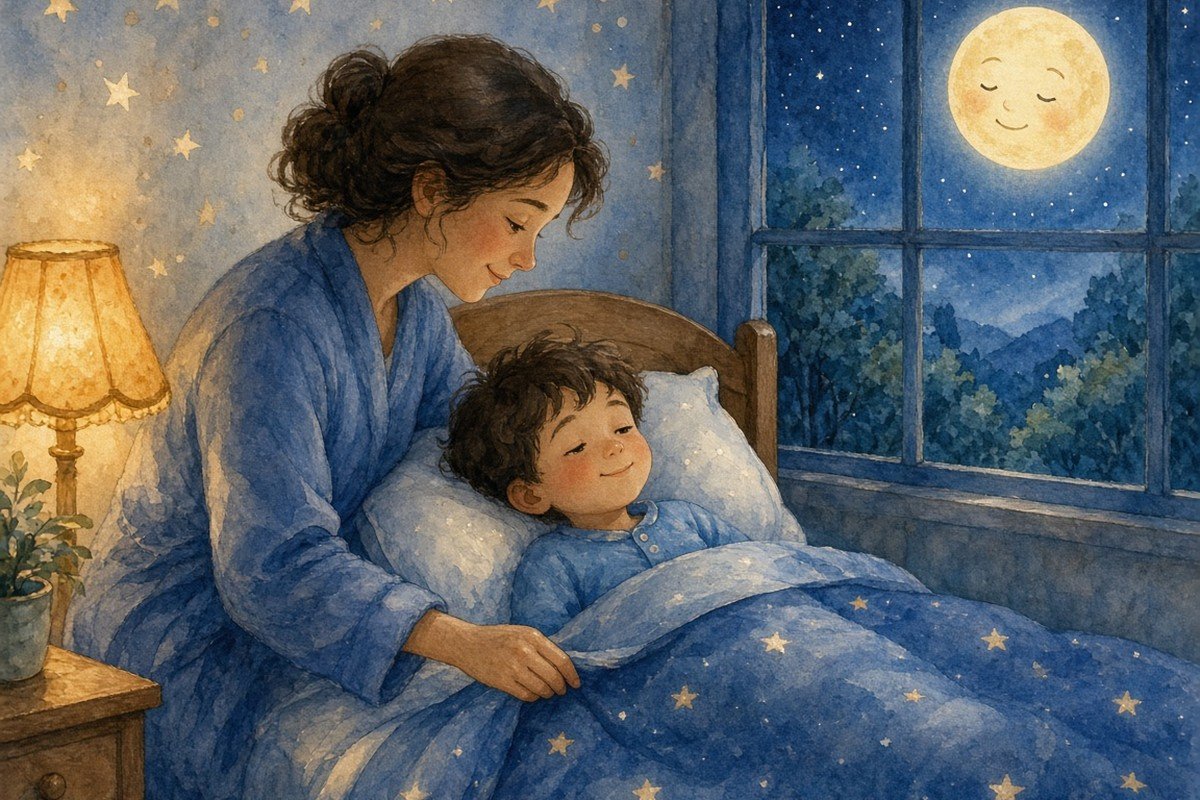
The Quran tells us how Ibrahim thought about the sky. At night he saw a bright star, but then it set and disappeared. He saw the moon rising, shining and silver, but then it set too. In the morning he saw the sun, big and golden, but in the evening it also set.
Ibrahim said that he did not love things that disappear. He turned his face to the One who made the heavens and the earth (Surah Al-An'am, 6:76-79). The stars, the moon, and the sun were not gods. They were made by Allah, and they obeyed Allah. Only Allah is always there, and only Allah deserves to be worshipped.
Ibrahim loved his father very much. So he spoke to him gently. "O my father," he said, "why do you worship something that cannot hear, cannot see, and cannot help you at all?" (Surah Maryam, 19:42).
But his father became angry. He told Ibrahim to go away. Ibrahim was sad, but he stayed polite. He said, "Peace be upon you. I will ask my Lord to forgive you." Even when his father was angry, Ibrahim answered with kindness.
Ibrahim also spoke to his people. He asked them, "What are these statues that you sit before?" They said, "We found our fathers worshipping them." They were only copying what others did, without thinking.
One day, the people went out of the town for a big festival. The temple full of statues was empty. Ibrahim went inside. He took an axe and broke the statues into pieces, all except the biggest one. He hung the axe on the biggest statue. He wanted the people to see with their own eyes that statues cannot protect even themselves.
When the people came back, they were shocked. "Who did this to our gods?" they cried. Some of them said, "We heard a young man talking about them. His name is Ibrahim."
They brought Ibrahim in front of everyone. "Did you do this to our gods, O Ibrahim?"
Ibrahim answered wisely. "Rather, this biggest one did it. Ask them, if they can speak" (Surah Al-Anbiya, 21:62-63).
The people were quiet. They looked down. They knew that the statues could not speak. For a moment, they understood that Ibrahim was right. Then they said, "You know very well that these cannot speak."
Ibrahim said, "Then do you worship, instead of Allah, things that cannot help you or harm you?"
But the people were too proud to change. Instead of thanking Ibrahim, they became angry. The king and the people decided to punish him. They built a very big fire and they threw Ibrahim into it.
But Ibrahim was not afraid. He trusted Allah completely. In the hadith reported by Al-Bukhari, Ibrahim said, "Hasbunallahu wa ni'mal wakil." This means, "Allah is enough for us, and He is the best One to take care of us."
And then something amazing happened. Allah spoke to the fire. Allah said, "O fire, be coolness and safety for Ibrahim" (Surah Al-Anbiya, 21:69).
The fire obeyed Allah. Fire burns only because Allah lets it burn. When Allah told it to be cool, it became cool. It did not hurt Ibrahim at all. When the fire went out, Ibrahim walked out safe and well.
The people stared. They had seen a great sign with their own eyes. Allah had protected His prophet.
Later, Ibrahim left that land. He traveled to new places to call people to Allah. His wife Sarah traveled with him, and also his nephew, Lut, who believed in him and later became a prophet too.
Allah blessed Ibrahim with two sons who also became prophets: Ismail and Ishaq, peace be upon them.
When Ismail grew into a boy, Ibrahim saw in a dream that he was sacrificing his son. The dreams of prophets are true. It was a test from Allah. Ibrahim told Ismail about the dream. Ismail said, "O my father, do as you are commanded. You will find me, if Allah wills, among the patient" (Surah As-Saffat, 37:102).
Both of them were ready to obey Allah. But Allah did not want Ismail to be harmed. Allah called out to Ibrahim and told him that he had already passed the test. Allah sent a ram to be sacrificed instead. Ismail was safe. Muslims remember this every year at Eid al-Adha, by sharing meat with family, neighbors, and the poor.
Later, Allah commanded Ibrahim and Ismail to build a house for worshipping Allah. Together, father and son built the Kaaba in Makkah. Ismail brought the stones, and Ibrahim set them in place. As they worked, they prayed, "Our Lord, accept this from us. You are the All-Hearing, the All-Knowing" (Surah Al-Baqarah, 2:127).
Today, millions of people from all around the world visit the Kaaba. They remember Ibrahim and Ismail, and how they worshipped Allah alone.
Allah called Ibrahim His "khalil," His close friend (Surah An-Nisa, 4:125). What an honor!
Prophet Ibrahim, peace be upon him, used his mind to see the truth. He spoke kindly, even to those who were angry with him. And when the fire was hot and big, he trusted Allah. And Allah made the fire cool and peaceful.