📖 Story
It is told that in a faraway land there was a young sultan who lived in a great palace of white marble, surrounded by gardens and fountains. Every day his ministers told him, "Our lord, all your people are happy. There are no poor and no hungry in your land."
But the sultan was clever, and he said to himself, "How can I know that what they say is true when I never leave my palace? I must see with my own eyes."
One night the sultan put on old, patched clothes and a worn-out turban, and slipped out alone through a secret door, recognised by no one. He walked through the markets and the alleys, and then left the city for the distant villages.
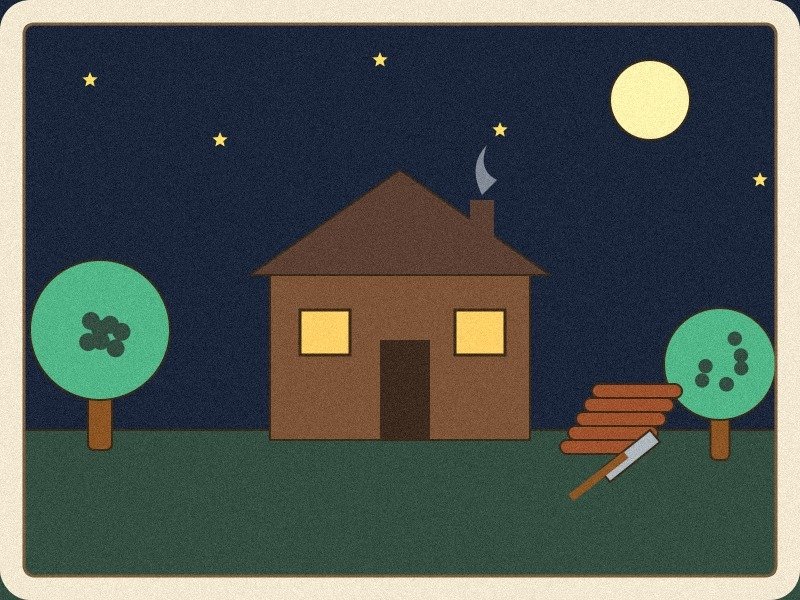
The sultan walked a long way, until he was tired and hungry. Night fell, and it began to rain. He saw a small light at the edge of the forest and walked towards it. It was a hut of wood and mud. He knocked on the door.
A thin man opened the door; his hands were rough from work. He was a woodcutter named Mansur. The sultan said, "I'm a stranger, a traveller, worn out by weariness and rain. May I find a place with you to spend the night?" Mansur said with a smiling face, "Welcome, welcome! A guest is the guest of Allah. Come in, brother, and warm yourself by the fire."
The sultan went in and saw that the hut was very small. It had an old mat, a fireplace, the woodcutter's wife and three small children. On the fire was a little pot with a few lentils, and beside it two loaves of bread.
The wife whispered to her husband, "Mansur, the food is little; it isn't enough for the children." Mansur said, "Food for two is enough for three, and food for three is enough for four. We'll eat a little, and our guest will sleep with a full stomach."
Then the woodcutter gave the sultan the biggest plate and a whole loaf, and shared the other loaf between his children and his wife. He himself ate only a few small mouthfuls, saying, "Eat, brother, eat. I'm full, alhamdulillah."
After supper, the woodcutter laid out the best spot near the fire for his guest and gave him his only blanket, while he slept on the floor by the door to keep the wind out of the house.
The sultan didn't sleep much that night. He looked at the sleeping children and the tired woodcutter and thought, "This man owns almost nothing, and yet he gave me everything he had. I own palaces and treasures, and I didn't know there was such poverty in my land!"
In the morning the sultan asked the woodcutter, "Mansur, how are the people of your village doing?" He said, "Brother, the taxes are heavy, the tax collector takes more than the sultan ordered, and the road to market is long and dangerous. But we're patient, and we pray that Allah will set the sultan right and guide him."
The sultan was moved. He thanked the woodcutter, said goodbye and returned to his palace. Three days later a great procession came to the village, with horses, banners and soldiers. The villagers were frightened and came out to look.
The procession stopped in front of Mansur's hut, and the sultan got down from his horse. The woodcutter looked at him and cried, "My guest! The stranger, the traveller!" The sultan smiled and said, "Yes, Mansur, I'm your guest, and I'm the sultan of this land."
The woodcutter was flustered and said, "Forgive me, my lord. I fed you lentils and made you sleep on a mat!" The sultan said, "On the contrary, you fed me the finest meal I've ever eaten, because it came from a generous heart. And you taught me what my ministers never taught me."
Then the sultan ordered that the unjust tax collector be punished, that the taxes on the poor be reduced, that a safe road to the market be built, and that a school for the children be opened in the village. And he made Mansur the guardian of all the sultanate's forests, to protect and care for them.
From then on, the sultan went out in disguise every month to learn for himself how his people lived. He used to say to his ministers, "I learned from a poor woodcutter that generosity isn't in having a lot of money, but in having a big heart. And that a just ruler sees with his own eyes and isn't content with what he's told."
The people of the village lived in comfort and happiness, and they told their children the story of the woodcutter who fed the sultan his loaf, and the sultan who then fed the whole village.




💬 Comments (0)
Add a comment
No comments yet. Be the first to comment.